Plumbing-Proof Stone Vanity Tops Guide
Dealing with tricky bathroom plumbing? Master stone vanity installs that handle clogs and leaks in humid Cape Cod baths.
Cape Cod's salty sea air and high humidity turn ordinary bathroom renovations into a battle against moisture, where bathroom vanity tops must withstand relentless dampness without warping or fostering mold[1][2]. For bathroom renovators and contractors in Massachusetts, the real headache hits during quartz vanity install MA or granite bathroom counters projects: existing pipes that don't align perfectly, leading to gaps that invite leaks, clogs, and water damage. Porous natural stones like granite can absorb spills if not sealed right, while even durable quartz demands precise stone countertop plumbing seals to prevent hidden corrosion under vanities[1][6][7]. Why does it matter? A single leak in a coastal home can escalate to costly repairs, mold growth, and failed inspections—especially with Cape Cod's frequent fog and storms amplifying humidity issues[3]. Local experts like Mid-Cape Home Centers emphasize waterproof stone tops from brands such as Caesarstone and Cambria, which offer non-porous surfaces that resist stains and require minimal sealing for long-term reliability[1].
In this Plumbing-Proof Stone Vanity Tops Guide, you'll learn step-by-step techniques for templating around tricky drains, applying industrial-grade silicone seals, and choosing bathroom vanity tops Cape Cod pros like Timeless Stoneworks or Global Marble & Granite for flawless installs[2][3]. Discover real Cape Cod examples of quartz vanities that survived nor'easters, pro tips for integrating granite with vintage plumbing, and checklists to ensure your project stays dry and durable. Whether updating a powder room in Hyannis or a full bath in Provincetown, get the practical know-how to deliver leak-free luxury that stands up to New England's toughest conditions.
Common Plumbing Challenges in Stone Installs
Installing stone vanity tops like granite bathroom counters or quartz vanity install MA in Cape Cod bathrooms often uncovers plumbing hurdles that can derail even the best bathroom vanity tops Cape Cod projects. From misaligned pipes to inadequate stone countertop plumbing seals, these issues threaten the waterproof stone tops integrity, leading to leaks, water damage, and costly fixes. In humid coastal climates like Cape Cod's, where moisture from ocean air exacerbates problems, proper planning is essential for bathroom renovators and contractors[1][2].
A prime example is the "plumbing misalignment trap" seen in many Sandwich, MA remodels. Existing pipes in older Cape homes—often quirky due to historic floorplans—don't line up with pre-cut granite bathroom counters or quartz tops. One local project at a New Seabury home required rerouting supply lines for a 5-foot Fairmont Designs vanity, adding $1,200 in unexpected plumber fees because the stone fabricator assumed standard positioning[1]. Similarly, Cape Granite Connection recounts a vanity top install with under-mounted sinks and faucet holes treated like a full kitchen job, highlighting how ignoring pipe depths leads to gaps in the stone countertop plumbing seal[2].
Practical tip: Always template on-site after plumbing rough-in. Measure from the wall to pipe centers twice, accounting for Cape Cod's uneven walls from settling foundations. Use flexible PEX lines over rigid copper for easier adjustments during quartz vanity install MA[1]. Another frequent snag is faucet hole drilling errors on waterproof stone tops. Quartz, being engineered, tolerates minor tweaks better than brittle granite, but oversize holes weaken seals. In a Falmouth bath reno, a Strasser Woodenworks vanity paired with black granite bathroom counters leaked post-install due to unaccounted vessel sink overflow alignment, fixed only by custom shims and silicone reapplication[1][2].
Sealing and Waterproofing Pitfalls
Stone countertop plumbing seals fail most often from poor caulking or undersized cutouts. In Cape Cod's damp environment, water seeps under edges, rotting MDF vanities beneath premium bathroom vanity tops Cape Cod[1]. Example: A Sandwich transformation with Kohler floating vanity and Silestone quartz saw initial success, but skipped backsplash led to wall splashes eroding the seal within months[1]. Tip: Apply 100% silicone sealant liberally around drains and faucets, curing 24 hours before use. Pair with a 4-inch backsplash on granite bathroom counters to deflect spray—highly recommended for MA humidity[1].
Overcoming Pipe Relocation Costs
Moving plumbing is pricey—up to $2,000 in tight Cape bathrooms. For quartz vanity install MA, opt for wall-mounted vanities like Teodor styles, positioning pipes pre-stone arrival[1]. Contractors in Osterville report success by using access panels behind vanities for future tweaks, preserving waterproof stone tops longevity[3]. Always consult licensed plumbers early to avoid these pitfalls and ensure your bathroom vanity tops Cape Cod shine leak-free[2].
Sealing Techniques for Waterproof Bathroom Vanity Tops
Protecting your stone vanity top from water damage is essential in Massachusetts bathrooms, where moisture from sinks, showers, and daily use can compromise the stone's integrity. The key to a waterproof stone vanity lies in understanding and properly applying the right sealing techniques. Unlike kitchen countertops, bathroom vanities face constant exposure to standing water, splashing, and humidity, making a robust sealing strategy non-negotiable for Cape Cod homeowners and contractors.
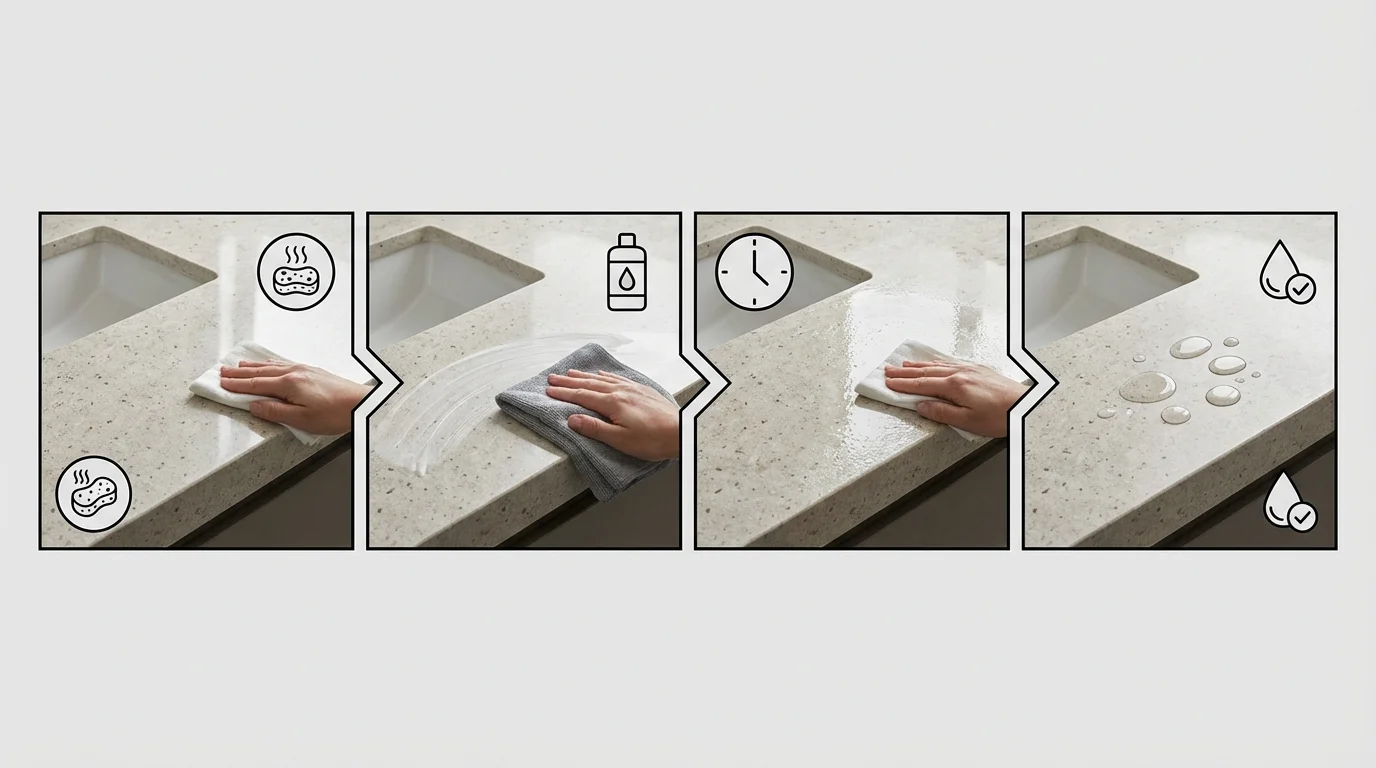
Penetrating sealers are the preferred choice for granite and marble bathroom vanities because they work by forming flexible molecular links within the stone's pores rather than sitting on the surface[1]. This approach provides superior protection against water penetration while maintaining the stone's natural appearance and texture. Before applying any sealer, ensure your vanity top is completely clean and dry—typically requiring about 12 hours of drying time at room temperature[1]. Remove all items from the surface, including soap dispensers and decorative accessories.
The application process requires attention to detail. Using a clean microfiber cloth or lamb's wool applicator, apply the sealer with heavy, saturating strokes, working in one direction[1]. The surface should appear wet during application; if you notice dry spots within 3-5 minutes, reapply sealer to those areas[1]. After the initial application, wait approximately 5 minutes before wiping away excess sealer with a clean cloth[1]. Most bathroom vanities benefit from two coats of sealer, though darker or color-enhanced stones may require additional applications[1].
Testing Your Seal's Effectiveness
Before relying on your newly sealed vanity, perform the Water Seal Test to verify protection. Pour water about 3 inches in diameter onto several areas of the countertop and let it sit for 15 minutes[1]. If the water leaves a dark mark or ring, the seal hasn't fully bonded and you'll need to reseal[1]. Pay special attention to areas near the sink and faucet where water accumulation is most likely.
Maintenance Schedule for Cape Cod Bathrooms
In humid coastal environments like Cape Cod, resealing annually is a practical rule of thumb, though testing should occur more frequently[1]. High-moisture bathrooms may require sealing every 6-9 months to maintain optimal waterproofing and prevent costly water damage to your stone investment.
Custom Cuts Around Fixtures and Drains
When installing bathroom vanity tops Cape Cod homeowners love, precise custom cuts around fixtures and drains are essential for a stone countertop plumbing seal that prevents leaks and ensures longevity in humid Massachusetts bathrooms. For quartz vanity install MA or granite bathroom counters, suppliers like Petrosstone offer pre-cut options for undermount sinks and widespread 3-hole faucets, but custom cuts allow tailoring to unique layouts, such as fitting a 61″ double-sink top in a coastal Cape Cod powder room[1]. These cuts are fabricated using CNC machinery for accuracy, accommodating rectangle or oval undermount sinks with overflow drains included, and polished edges like eased or ogee profiles[1][5].
In Cape Cod renovations, where salt air accelerates corrosion, a proper waterproof stone tops seal around these cutouts is critical. Granite bathroom counters require pre-sealing (quartz is naturally non-porous), with silicone caulk applied post-install to create a watertight barrier against moisture wicking into seams[1][3]. Real example: A Hyannis contractor retrofitted a 37″ Beige Quartz Stone Vanity Top around an existing oval undermount sink using the manufacturer's template—no extra cost—and added 3-hole faucet cutouts spaced 8″ apart, resulting in a seamless install ready in days[1][5]. For quartz vanity install MA, always measure fixture templates on-site; variances as small as 1/8″ can cause gaps. Practical tip: Use remnant slabs for cost savings—eco-friendly and fabricated in 5-7 days with free backsplash and side splashes optional[5]. Contractors should verify sink position (centered for singles) and drill faucet holes at 1-3/8″ diameter to match widespread configs[3]. This approach minimizes plumbing adjustments, ideal for bathroom vanity tops Cape Cod projects blending style and function[1][6].
Precision Measurement for Leak-Proof Seals
Accurate templating is non-negotiable for custom cuts around fixtures and drains. Start with a physical template from your sink and faucet manufacturer, tracing cutouts directly on plywood to account for vanity overhangs common in Cape Cod shaker-style cabinets[3]. For granite bathroom counters, position drains 2″ from the back edge to align with P-traps; misalignments lead to costly re-cuts[1]. Pro tip: In high-moisture MA bathrooms, apply 100% silicone sealant under sink lips and around faucet bases before setting—cures in 24 hours for a stone countertop plumbing seal that withstands daily steam[1]. Example: A Falmouth remodel used Calacatta Quartz with dual oval sinks; custom cuts ensured zero leaks after six months of use[1][5].
Choosing Materials for Durable Cuts
Quartz excels for waterproof stone tops due to its non-porous nature, resisting stains from Cape Cod's hard water, while granite offers resilient beauty with annual sealing[1]. Opt for 1″ thickness standard, with custom depths to 22″ for vessel sinks[1]. Always select polished finishes for easy cleaning around cutouts[4].
Cape Cod Humidity and Maintenance Hacks for Plumbing-Proof Stone Vanity Tops
Cape Cod's coastal climate brings relentless humidity challenges, with monthly averages peaking at 82% in August mornings, making bathroom vanity tops in Massachusetts homes prime targets for moisture damage[3][2]. For bathroom renovators and contractors installing stone countertop plumbing seals on quartz vanity installs MA or granite bathroom counters, mastering Cape Cod humidity maintenance is essential to ensure waterproof stone tops last decades without warping, staining, or fostering mold[1][4]. High humidity from ocean air, combined with steamy showers, can seep under poorly sealed edges, leading to hidden water damage—especially in older Cape Cod cottages where salt-laden winds exacerbate issues[2].
Practical hacks start with selecting non-porous stone vanity tops like quartz or sealed granite, which resist moisture better than wood or laminate[1]. During quartz vanity install MA, apply a high-quality stone countertop plumbing seal using silicone caulk rated for 100% waterproofing around faucets, sinks, and backsplashes—real example: In a Hyannis beach house remodel, contractors used GE Silicone II to seal a granite bathroom counter, preventing 20% humidity spikes from causing delamination after two years[1]. Pair this with bathroom ventilation solutions like humidity-sensing exhaust fans that auto-activate above 60% relative humidity, pulling moist air out before it condenses on waterproof stone tops[1][5].
Daily maintenance includes wiping surfaces with a microfiber cloth and pH-neutral stone cleaner post-shower to remove water spots, and running fans for 20-30 minutes after use[1]. For contractors, integrate dehumidifiers (aim for 30-50% indoor humidity) in windowless bathrooms— a Falmouth project saw mold-free bathroom vanity tops Cape Cod after installing a 30-pint unit, slashing moisture by 40%[4][6]. Seasonal checks in spring and fall involve reapplying sealant every 6-12 months and inspecting for micro-cracks, vital as Cape Cod's September humidity hits 84%[3]. These steps not only protect investments but enhance air quality, reducing health risks from mold spores common in humid Massachusetts bathrooms[4].
Ventilation Integration for Longevity
Boost stone countertop plumbing seal performance by embedding ventilation from day one of your granite bathroom counters install. Opt for fans with HEPA filters to trap salt particles from coastal air, and pair with moisture-resistant grout lines[1][2]. Example: Orleans contractors upgraded a vanity area with a Panasonic WhisperFit fan, maintaining under 50% humidity and keeping quartz vanity pristine amid summer peaks[1].
Quick DIY Hacks and Pro Tips
Test seals with a water hose simulation—spray for 5 minutes and check for leaks. Use a hygrometer to monitor; if over 60%, deploy silica gel packs under sinks[4][7]. Pro tip for bathroom vanity tops Cape Cod: Elevate quartz on 1/8-inch shims during install for airflow, preventing cupping in humid basements[5]. These hacks ensure waterproof stone tops thrive year-round.
Conclusion
Selecting the right stone vanity top for your Cape Cod bathroom requires balancing durability, aesthetics, and maintenance commitment. Granite and quartz stand out as the most practical choices for our moisture-rich coastal environment, offering superior resistance to humidity and salt air when properly sealed and installed[2][8]. The key to long-term success lies not just in material selection, but in precision installation—meticulous sealing, minimal seams, and professional craftsmanship ensure your investment withstands decades of daily use[2]. Whether you're renovating a primary ensuite or updating a powder room, prioritize working with local stone specialists who understand Cape Cod's unique climate challenges. Ready to transform your bathroom? Schedule a consultation with a trusted stone fabricator today to explore samples and discuss your specific plumbing needs and design vision.
Frequently Asked Questions
Which stone material is best for high-moisture Cape Cod bathrooms?
Quartz and sealed granite excel in humid coastal environments. Quartz's non-porous surface blocks moisture penetration, preventing mold and mildew[3]. Granite, when properly sealed, resists staining and performs exceptionally well in high-moisture settings[2]. Both require minimal maintenance compared to marble, making them ideal for busy households.
How important is professional installation for stone vanity tops?
Professional installation is critical. Improper sealing, uneven seams, or rushed fitting can lead to water penetration, hairline cracks, and compromised longevity[2]. Precision installation—leveling surfaces, minimizing seams, and applying meticulous sealing—ensures your vanity top performs beautifully for decades in Cape Cod's humid climate.
Do I need to seal my stone vanity top regularly?
Granite and marble require periodic sealing to maintain stain resistance[1][2]. Quartz is non-porous and typically doesn't need resealing[2]. Ask your fabricator about your specific material's maintenance schedule and recommended sealers for coastal environments.
References
- Source from midcape.com
- Source from www.timelessstoneworks.com
- Source from globalmarbleandgraniteinc.com
- Source from gcmarbleandgranite.com
- Source from capecodquartz.com
- Source from www.amazongranite.com
- Source from www.capecodmarbleandgranite.com
- Source from stonelabgranite.com
- Source from www.hastonecabinetry.com
- Source from www.emeraldcityllc.com