Identify Your Countertop Material in 5 Steps
Identify Your Countertop Material in 5 Steps
Unsure if your countertop is granite, quartz, or marble? Follow this simple guide to identify it accurately and plan your next upgrade.
Whether you're a Cape Cod homeowner evaluating an existing bathroom vanity or preparing to renovate your kitchen, knowing your countertop material is the first step toward making smart decisions about maintenance, repairs, and future upgrades. Many homeowners assume they know what their countertops are made of, only to discover during a renovation project that they've been caring for them incorrectly—or missing out on their full potential.
The three most popular stone countertop materials—granite, quartz, and marble—each have distinct characteristics that affect durability, maintenance requirements, and longevity. Granite countertops can last 30 years or more with proper care[1], while quartz engineered stone can last up to 50 years[1]. Marble, prized for its luxurious appearance, requires more frequent maintenance but rewards you with timeless elegance[1]. Understanding which material you have helps you protect your investment and plan realistic maintenance schedules.
The good news? Identifying your countertop material doesn't require professional expertise. By examining a few key features—from surface patterns to texture and hardness—you can confidently determine what you're working with. In this guide, we'll walk you through five practical steps to identify your countertop material, so you can care for it properly and make informed decisions about your next home renovation project.
Common Stone Types in Cape Cod Homes
In Cape Cod homes, especially for bathroom vanity tops MA, the most common stone types include granite, quartz, marble, and quartzite, each offering unique traits suited to the region's humid coastal climate and classic architecture[1][2]. Homeowners assessing bathroom vanities often start with stone identification tips like checking texture, veining, and hardness to identify granite countertops or distinguish quartz vs marble Cape Cod styles. Granite stands out as a top choice for its durability and low maintenance; it's a natural igneous rock with speckled patterns in earthy tones like black, gray, or beige, resisting heat and scratches ideal for busy family bathrooms[1][2][3]. For example, in a Hyannis beach house renovation, granite vanity tops from Roma Tile & Marble held up against salty air without frequent sealing, maintaining their unique veining that complements shiplap walls[4].
Quartz, an engineered stone made from 93% natural quartz and resin, mimics granite or marble but is non-porous, stain-resistant, and maintenance-free—perfect for Cape Cod humidity where moisture lingers[2][3][5]. A practical tip: Run water on the surface; quartz shows no absorption and has a uniform look without natural fissures, unlike true stone. Local installs at Cape Cod Quartz Countertops feature quartz vanities in sleek whites for modern Osterville baths, replicating marble elegance without etching from bath products[5].
Marble brings timeless veining and soft elegance to bathroom vanity tops, but it's softer and requires sealing to prevent stains in coastal homes[1][2]. Quartzite, a metamorphic rock often confused with marble, offers similar beauty with granite-like hardness, thriving in sunny Cape bathrooms without fading[1][2]. Use this countertop material guide: Scratch test gently—marble marks easily, while quartzite resists[2].
Identifying Granite vs. Quartz in Your Vanity
To identify granite countertops, look for irregular speckles and feel its cool, natural texture; it needs periodic sealing in Cape Cod's damp air[1][3]. Quartz feels warmer, uniform, and repels liquids instantly—no sealing required, making it a smart pick for low-maintenance bathroom vanities MA[2][5]. Example: A Dennis homeowner swapped etched marble for quartz mimicking Uba Tuba granite, saving on upkeep while boosting resale value[3].
Quartz vs Marble: Cape Cod Practical Tips
For quartz vs marble Cape Cod, choose quartz for high-use vanities—it's bacteria-resistant and versatile for contemporary or traditional looks[2][5]. Marble suits low-traffic powder rooms, developing a patina like in classic Chatham cottages, but seal monthly[1][2]. Tip: Shine a light through thin edges—marble glows translucently, quartz stays opaque[9]. Consult local fabricators like American Stone for slabs that fit your coastal style[2].
Visual and Touch Tests Explained
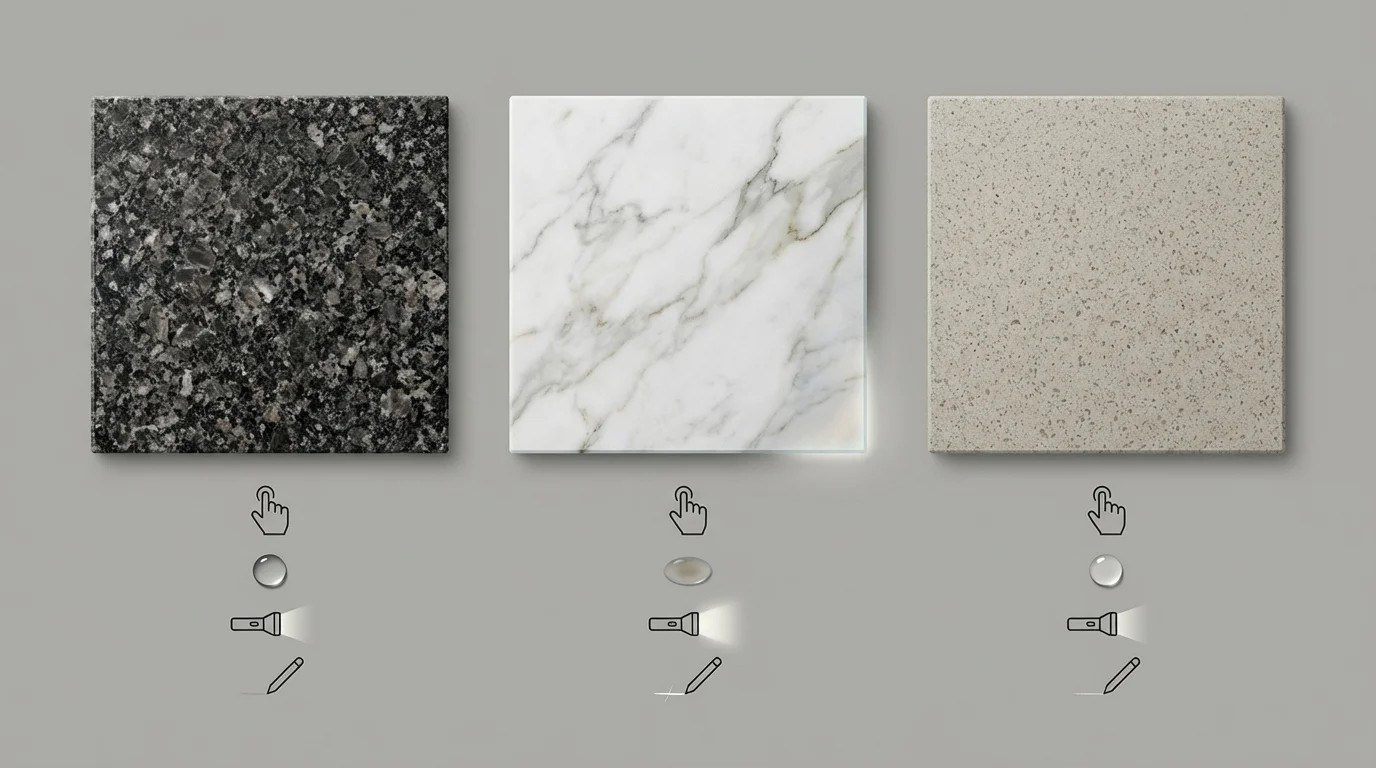
When assessing your bathroom vanity top in a Cape Cod home, visual and touch tests are simple, effective ways to identify granite countertops, distinguish quartz vs marble, and confirm other stone identification tips. These DIY methods help homeowners evaluate materials without tools, ideal for older coastal properties where bathroom vanity tops MA often feature natural stone exposed to humidity and salt air[1][5]. Start with visuals: Examine patterns, colors, and uniformity under good lighting. Granite shows visible grains and speckles in varied shades like black, gray, or earthy tones common in Cape Cod renovations, with a slightly rough texture when touched—run your fingers across to feel the mineral variations[1][2]. Marble, popular for elegant vanities, reveals distinct veining patterns in gray or black against white, feeling cool and smooth but slightly porous; in humid Massachusetts bathrooms, it may show subtle etching from water[1][5]. Quartz, an engineered choice for low-maintenance, has consistent color with visible flecks or sparkling crystals, offering a uniform, smooth finish that's warmer than stone—perfect for busy family vanities resisting stains from toiletries[1][4].
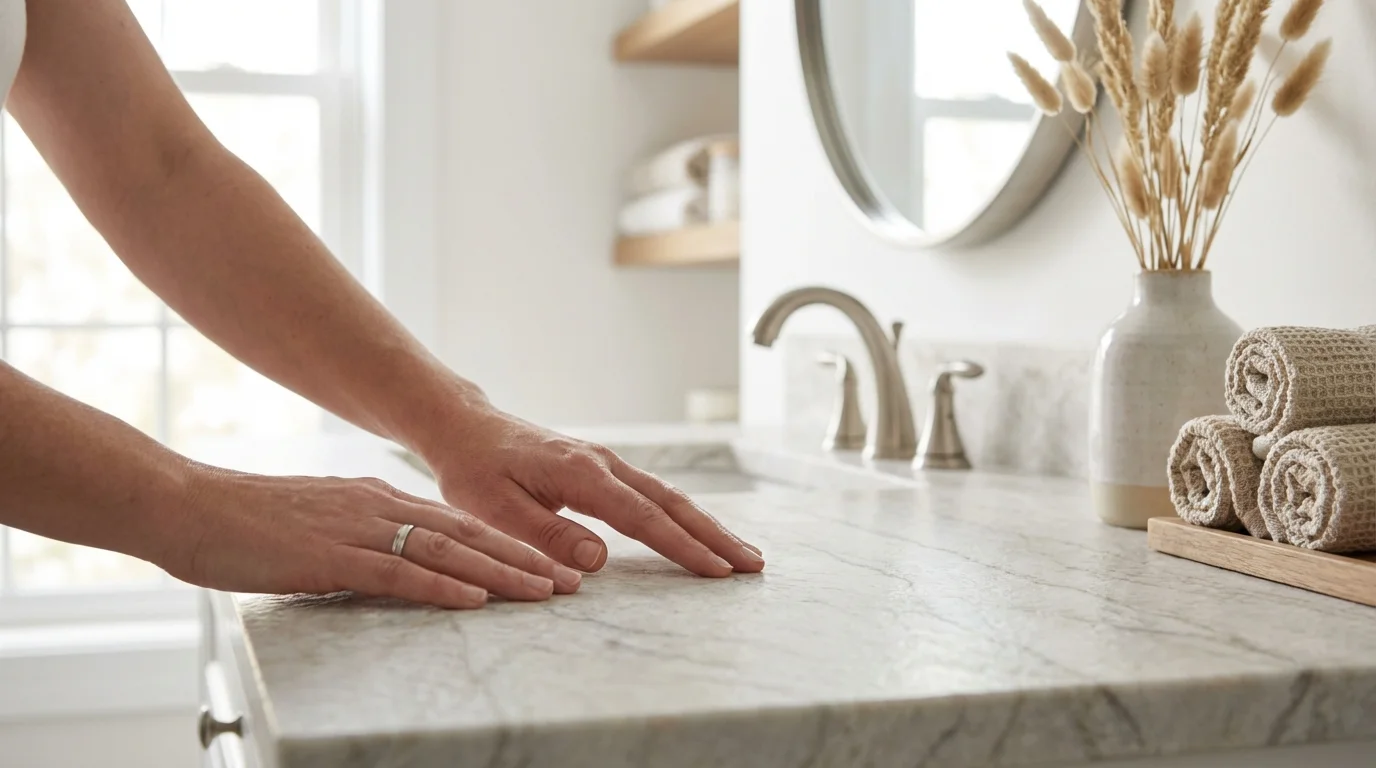
For touch tests, press your palm flat: Stone like granite or marble stays cool longer due to density, while quartz warms quickly from resins[5]. Check edges or undersides for clues—granite and marble slabs are typically 3 cm thick and solid, without peeling layers like laminate[2]. In Cape Cod, where salt air accelerates wear, feel for leathered finishes on granite, adding rustic texture that hides fingerprints on vanity surrounds[6]. Real example: A Hyannis homeowner mistook veined quartz for marble on their double-sink vanity until touching revealed no coolness and uniform flecks, avoiding costly sealing mistakes[1][5]. Always test discreetly to avoid damage, combining senses for accuracy in your countertop material guide.
Visual Inspection Tips for Cape Cod Vanities
Focus on patterns first: Quartz vs marble Cape Cod styles often mimic each other, but marble's translucent veining glows softly, while quartz lacks depth—view edges to spot surface-deep patterns in lower-quality quartz[1][4]. Look for sticker branding under sinks (e.g., Silestone for quartz) or seam styles; quartz seams vanish with tinted epoxy[2]. In beachy bathrooms, granite's speckled grains resist fading better than marble's veins, which yellow from steam[1].
Hands-On Touch Tests
Glide fingertips over the surface: Granite feels textured and solid, marble smooth yet organic, quartz sleek and consistent—no pits or fissures in premium slabs[1][4][5]. Tap gently; stone "thuds" heavily, unlike hollow laminate[2]. For bathroom vanity tops MA, test porosity by dripping water—if it beads on quartz but absorbs slightly on marble, you've identified it[5]. Pro tip: Compare to known samples at local Cape Cod fabricators for confidence[1].
Advanced Identification Techniques
For bathroom vanity tops in Cape Cod homes, where humidity from coastal air can affect stone identification, advanced techniques go beyond basic checks to pinpoint granite countertops, distinguish quartz vs marble, and ensure durability for high-moisture areas like vanities. Start with visual inspection of mineral composition: examine coloration and texture under good lighting. Granite often shows coarse-grained minerals—pink hues from potassium feldspar, black specks of biotite or hornblende, and light areas with high quartz content—visible as distinct crystals[1][8]. In a Cape Cod bathroom, a vanity top with these rugged grains and varied patterns likely indicates premium granite from local suppliers, prized for its resistance to etching in humid environments[2]. Contrast this with marble, which features soft, flowing veins rather than grains, making quartz vs marble Cape Cod comparisons straightforward visually[3][8].
Next, use magnification for mineral identification. Grab a 10x jeweler's loupe (available at hardware stores in Hyannis) to inspect crystal structures on your bathroom vanity top MA. Sharp, angular quartz crystals confirm granite, while quartz engineered surfaces show uniform, glassy consistency without natural variation[1][3]. Practical tip: In older Cape Cod cottages, check for high-end natural stone traits like unique blues or purples, thick slabs (1¼ inches+), and smooth surfaces free of pits—hallmarks of quality granite over budget imports[2].
For definitive results, perform a cautious acid test: In an inconspicuous spot under the vanity (like inside the cabinet), apply dilute hydrochloric acid (10% solution, from lab suppliers). No fizzing points to granite or quartz (non-calcium based), while bubbling reveals marble's calcite[1]. Always neutralize with baking soda afterward to protect seals in moisture-prone bathrooms. Finally, inspect seams and undersides: Quartz has invisible, color-matched epoxy; granite or marble shows natural edges, often 3cm thick without plywood[3]. Local example: A Falmouth homeowner identified their vanity as granite (New Venetian Gold) via these steps, avoiding costly quartz replacement amid rising MA renovation costs[2].
These stone identification tips empower Cape Cod homeowners to assess countertop material guide accurately, matching vanities to coastal lifestyles.
Professional Lab Analysis
When DIY methods fall short, especially for rare slabs in historic Cape Cod bathrooms, consult geologists for thin section analysis or X-ray diffraction. These reveal exact mineral profiles—e.g., 60-70% quartz in granite—confirming origin and suitability for wet areas[1]. Labs like StoneForensics ship samples affordably; results guide sealing for marble's sensitivity or quartz's low maintenance[1][3].
Edge and Substrate Checks
Fingertip along vanity overhangs: Granite and marble feel solid (no hollow ding), often 3cm thick; quartz matches but lacks mineral grains[3]. Peel paint chips under cabinets—stone shows natural substrate, laminate reveals particleboard. Ideal for bathroom vanity tops MA upgrades[3].
When to Call Local Experts for Stone Countertop Identification
Even with a solid countertop material guide and hands-on stone identification tips, there are moments when DIY efforts fall short, especially for bathroom vanity tops MA homeowners in Cape Cod. If you've snapped photos, checked edges, and run basic tests like the fingertip peel or thickness tap but still can't confidently identify granite countertop or distinguish quartz vs marble Cape Cod, it's time to bring in pros[1][2]. Local experts from shops like Cape Cod Marble & Granite or Olimarble & Granite offer on-site inspections that reveal hidden details—such as underside stickers saying "Silestone" for quartz or faint seams indicating fused solid surface—without risking damage[1][3][5].
In Cape Cod's humid coastal climate, materials like granite (durable but needs annual sealing) or marble (elegant yet prone to etching) behave differently than inland, and misidentification can lead to costly errors, like applying the wrong sealant to a quartz surface that's already non-porous[2][5]. For bathroom vanities, where moisture is constant, experts assess porosity via simple water drop tests: marble absorbs quickly, while quartz repels entirely[1][2]. A real example? A Hyannis homeowner thought their vanity was granite due to its speckled look but discovered it was softer marble after acid from cleaner etched it—local fabricators confirmed via magnification of crystal patterns, preventing further damage and recommending a switch to low-maintenance quartzite[2][9]. Calling experts early saves on replacements; a quick consult often costs less than a cracked slab fix[1].
Signs Your DIY Identification Needs Backup
Unsure results from visual cues—like consistent colors screaming engineered quartz versus unique veining in natural marble—warrant a pro visit, particularly if seams show epoxy tinting or T-mold strips[1][2]. In bathrooms, tap for hollow "ding" sounds revealing laminate over plywood, common in older Cape homes, or check for paint chips exposing true substrates[1]. Experts use tools like UV lights to spot resin swirls in quartz, unavailable at home[5].
Cape Cod Pros for Bathroom Vanity Tops
Firms like American Stone Cape Cod or GC Marble & Granite specialize in quartz vs marble Cape Cod dilemmas, offering free slab views and climate-specific advice—quartz shines in humid baths for stain resistance, while quartzite mimics marble's look with granite-like toughness[2][6]. Schedule a template session; they'll identify granite countertop accurately and guide renovations, ensuring your vanity withstands salty air[3][9]. Practical tip: Bring photos and note maintenance history for faster, precise service[1].
Conclusion
Identifying your countertop material doesn't have to be a mystery—follow these 5 simple steps to confidently pinpoint whether you have granite, quartz, marble, or another stone in your Cape Cod kitchen, bathroom, or outdoor living space. Start by observing the appearance: look for granite's coarse crystal grains and shimmering quartz flecks, marble's bold veins, or quartz's uniform, flawless surface[1][2][6]. Next, touch the surface for hardness—granite resists scratches (Mohs 6-7), while softer marble yields more easily[1]. Tap it to hear the sound: a crisp "clang" signals dense granite or quartz, versus duller tones in lower-quality options[1]. Check edges and undersides for stickers, factory stamps, or substrate clues like plywood in laminates[3]. Finally, use caution with an acid test on marble (bubbling confirms calcium carbonate) but skip on granite, which doesn't react[1][2]. These hands-on methods empower Cape Cod homeowners to assess durability for salty coastal air, humidity, and daily use, ensuring your renovation choices last.
Mastering this process reveals your stone's strengths, like granite's heat resistance for beachy outdoor kitchens. Ready for the next step? Contact All Granite and Stone for professional identification and custom stone countertop installation tailored to Cape Cod homes.
Frequently Asked Questions
How can I tell if my countertop is granite or quartz?
Examine the texture and sound: Granite shows visible coarse grains of quartz, feldspar, and mica with a shimmering effect under light, producing a crisp "clang" when tapped due to its density[1][2]. Quartz has a uniform, pore-free surface from engineered quartz and resin, with a deep, short metallic tap sound[1][3]. Scratch test edges—granite resists keys, while quartz is non-porous and consistent through[1].
Is the acid test safe for identifying marble countertops?
Use extreme caution: drop diluted vinegar on an inconspicuous area like the back; bubbling indicates marble's calcium carbonate reacting, unlike non-reactive granite or quartz[1][2]. Avoid on sealed surfaces to prevent etching—marble is acid-sensitive, making it prone to damage in acidic Cape Cod kitchens with lemon or wine spills. Test sparingly and seal promptly[1].
What if I can't identify my countertop material visually—what's next?
Check undersides for brand stickers like "Silestone" (quartz) or "Cambria," or upload photos to AI tools like SlabZone for matches[3][5][7]. For accuracy, consult pros using microscopes or X-ray analysis, especially for Cape Cod renovations where coastal conditions affect stone durability. Avoid guessing to prevent improper care[2].
References
- Source from www.laurysenkitchens.com
- Source from www.stonedepotus.com
- Source from www.kitchenandbathcenter.net
- Source from www.greatlakesgm.com
- Source from umistone.com
- Source from www.ameriquartzusa.com
- Source from www.youtube.com
- Source from www.youtube.com
- Source from globalmarbleandgraniteinc.com
- Source from americanstonecape.com