Cape Cod Outdoor Kitchen Stone Build Guide
Cape Cod Outdoor Kitchen Stone Build Guide: Introduction
Building your dream outdoor kitchen? Master weather-proof stone selection and setup tailored to Massachusetts coastal conditions. If you're a Cape Cod homeowner dreaming of entertaining guests under the stars with a stunning stone outdoor kitchen, you're not alone—outdoor living spaces have become the heart of coastal homes. But here's the challenge: the Atlantic's salt air, freeze-thaw cycles, and moisture create unique demands that standard outdoor kitchens simply can't handle. Your countertops and stone veneer need to withstand harsh weather while maintaining their natural beauty for decades to come.[5]
That's where this guide comes in. Whether you're considering granite, quartzite, or limestone countertops, selecting the right stone for your Cape Cod patio renovation requires understanding both aesthetics and durability. Stone is a natural fit for Cape Cod homes—it's durable, timeless, and complements the coastal architectural style that defines our region.[5] But choosing the material is only half the battle. The build method matters just as much. From ledge stone to natural stone veneer to mortared CMU substrates, each approach offers different benefits depending on your skill level, budget, and vision.[1][2]
In this comprehensive guide, we'll walk you through everything you need to know: the best stone types for coastal Massachusetts weather, proven build methods that withstand our climate, step-by-step installation techniques, and practical tips from local experts. By the end, you'll have the knowledge to create an outdoor kitchen that's both beautiful and built to last.
Planning Your Outdoor Kitchen Layout
Crafting the perfect outdoor kitchen layout for your Cape Cod home starts with envisioning how you'll use the space amid salty sea breezes and unpredictable coastal weather. Whether hosting clambakes or casual barbecues, prioritize weatherproof stone countertops like granite outdoor kitchens MA favorites or durable quartzite outdoor install options that resist humidity and salt spray common in Dennis or Yarmouth.[1][3] Begin by measuring your Cape Cod patio renovation area—aim for at least 36 inches of outdoor kitchen countertops Cape Cod frontage for small setups, scaling to 72 inches for medium ones to ensure ample prep space.[4] Think like a chef: organize into zones—cold (fridge), prep (sink and counters), hot (grill), and serving (bar area)—to create efficient workflow.[1][4]
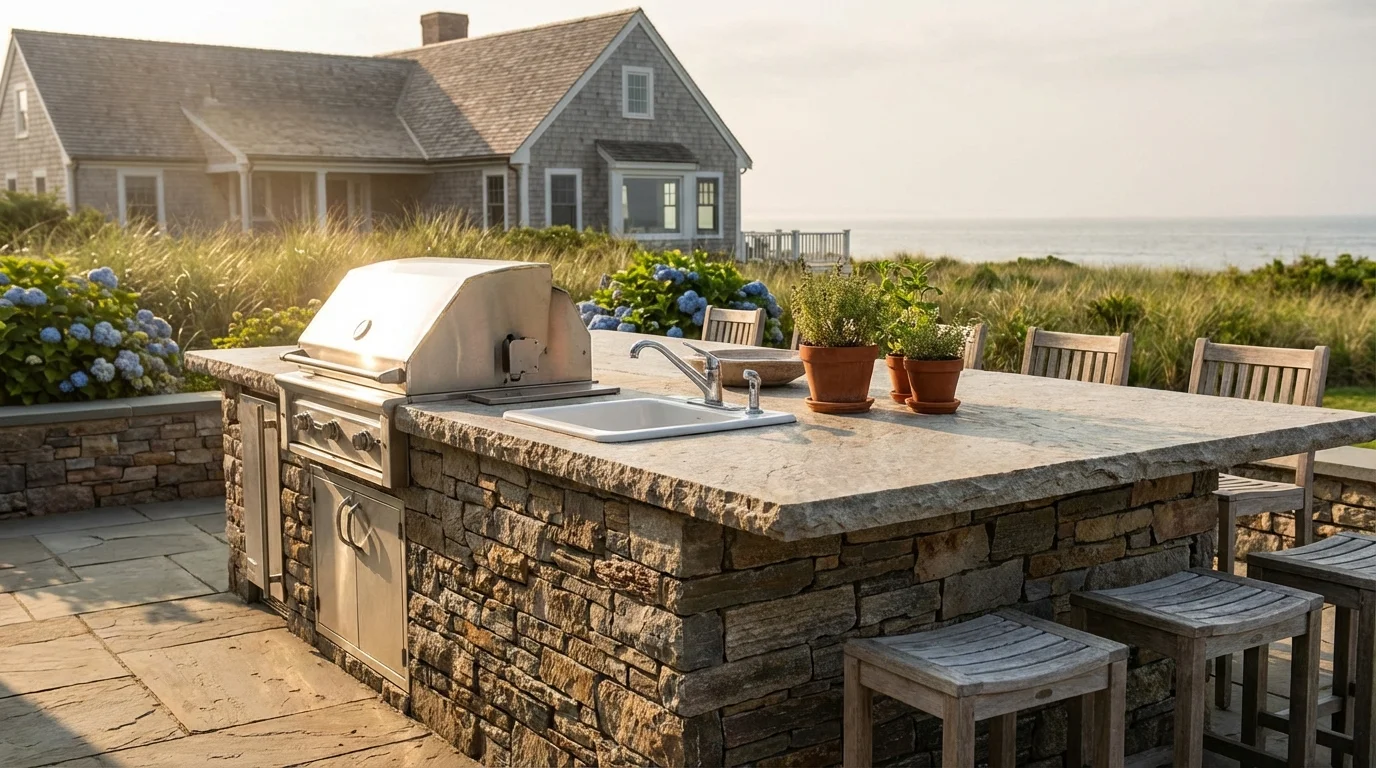
Popular layouts include the island, ideal for compact patios with the grill centered and serving zones on sides, saving space while allowing 24 inches of landing area beside the grill for tools.[1][4] For example, in a Dennis ranch remodel, an island-style kitchen with a raised granite backsplash shielded against crosswinds, pairing seamlessly with Azek decking.[3] The L-shape suits entertaining, letting you serve directly from counters elevated slightly for convenience, as seen in many Cape Cod designs where seating integrates nearby.[1] U-shape works for larger yards, accommodating extra appliances like pizza ovens, while galley separates cooking from dining for a streamlined flow.[1][2] Practical tip: Use chalk lines to outline your layout on the ground before building, ensuring alignment with your home's coastal architecture and views of Nantucket Sound.[1][2]
Select weatherproof stone countertops such as sealed granite or quartzite for low-maintenance beauty that withstands Cape Cod's freeze-thaw cycles—seal annually to prevent etching.[1][2] Factor in utilities: position sinks centrally for prep, near power for lighting, and consider wind direction for ventilation.[1] Budget 10-15% of your project for layout tweaks post-mockup.[6]
Choosing the Right Layout for Cape Cod Coasts
Cape Cod's windy, humid climate demands layouts that maximize shelter—opt for L-shape or U-shape against house walls to block nor'easters, as in waterfront Yarmouth remodels.[3][8] Allocate 15 inches of counter landing per fridge door and 18 inches per sink side for safety.[4] Real example: A local mason-built dream kitchen used quartzite outdoor install in a galley setup, providing 48 inches of prep space for summer lobster boils without indoor treks.[5]
Stone Countertop Integration Tips
Integrate granite outdoor kitchens MA by ensuring 2x4 framing supports stone weight, leaving 1-inch flanges for secure Cape Cod patio renovation installs.[2] Pro tip: Raise counters 36-42 inches for ergonomic serving, enhancing your outdoor living goals.[1][3]
Best Stones for Cape Cod Weather Resistance
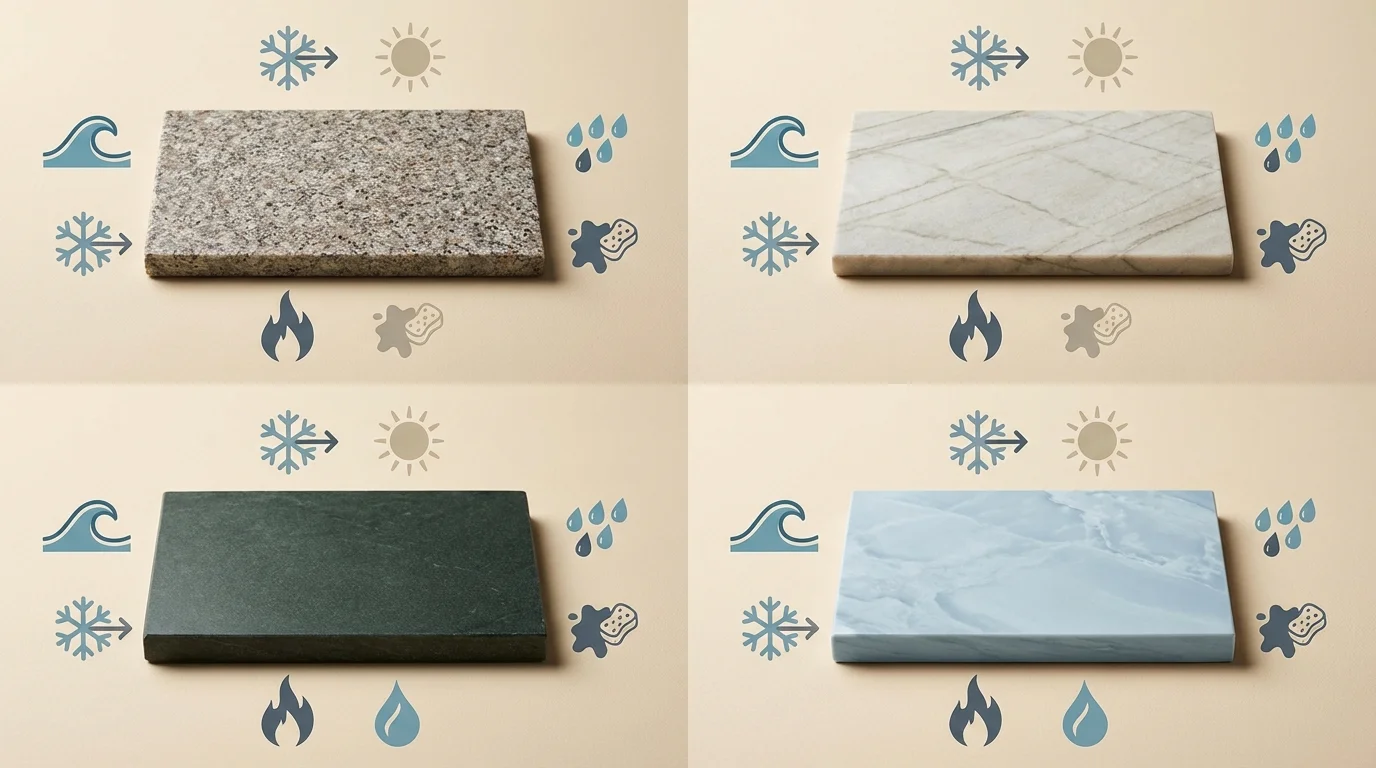
Cape Cod's coastal climate—featuring salty air, heavy rains, freezing winters, and intense summer sun—demands weatherproof stone countertops that resist moisture, freeze-thaw cycles, UV fading, and salt corrosion for your outdoor kitchen countertops Cape Cod projects.[1][2] Homeowners pursuing Cape Cod patio renovation or granite outdoor kitchens MA should prioritize quartzite outdoor install options like granite, quartzite, soapstone, and porcelain, which excel in durability and low maintenance.[1][2][5] For instance, in Hyannis homes, granite slabs from local suppliers like NT Pavers withstand decades of nor'easters without cracking, developing a patina that enhances coastal charm.[2][6] Granite is fade-resistant to hot summer sun and handles humidity well, though annual sealing in late summer prevents staining from winter rains—apply a penetrating sealer like those from Island Stone Hardscapes after cleaning.[1][2][4] Practical tip: Pair granite with bluestone accents for a seamless Cape Cod hardscaping look, as seen in Falmouth renovations where it resisted 50+ mph winds.[5]
Quartzite offers superior hardness over granite, mimicking marble's luxury veining while shrugging off scratches, heat, and UV rays—ideal for quartzite outdoor install in sunny Osterville patios.[1][2] It's stronger for high-use grilling stations but requires prompt spill cleanup and trivets for hot pots; a real-world example is a Dennis Port outdoor kitchen that held up through 2024's record snowfall without etching.[1][2] Soapstone shines as a non-porous, no-seal powerhouse, repelling moisture and bacteria in humid Cape Cod summers, with its matte finish gaining character like aged fieldstone walls in Chatham.[1][2][5] Avoid heavy impacts, but sanding refreshes scratches easily.
Porcelain pavers mimic natural stone while being fully non-porous, heat-stable through -20°F winters, and stain-proof—perfect for budget-friendly Cape Cod patio renovation without fading.[1][2] Local installs by Stonewood Products show it thriving in Mashpee's salty spray.[7]
Granite vs. Quartzite: Cape Cod Showdown
For granite outdoor kitchens MA, choose varieties like Absolute Black for bold contrast; it seals easily yearly and pairs with stainless appliances.[2] Quartzite, like Taj Mahal, delivers marble elegance with granite toughness but demands cutting boards—opt for it in entertaining-focused outdoor kitchens.[1][2] Both beat softer stones in freeze-thaw tests, but test samples outdoors first.[1]
Maintenance Tips for Longevity
Seal granite and quartzite annually with impregnators; clean soapstone with mild soap. For all, elevate installs 1-2 inches for drainage to combat Cape Cod's wet springs.[1][2][8] Consult pros like Thomas Michaels for custom weatherproof stone countertops.[8]
Step-by-Step Countertop Installation for Cape Cod Outdoor Kitchens
Installing outdoor kitchen countertops in Cape Cod demands precision to withstand salty coastal winds, humidity, and freeze-thaw cycles. For Cape Cod patio renovations, opt for durable options like granite outdoor kitchens MA or quartzite outdoor install materials, which offer superior weatherproof stone countertops resistance to etching and fading[1][7]. This guide walks Cape Cod homeowners through the process, drawing from local fabricators like American Stone in Cape Cod and real-world installs[5]. Expect 350-450 words of practical steps, with tips for a seamless outdoor kitchen countertops Cape Cod upgrade.
Begin by preparing your base: Ensure cabinets or frames are perfectly leveled using a 6' level, starting at the highest site point for drainage—crucial in rainy Cape Cod winters[1][2]. Install cement board (like Durock) on exposed frame sides with 1" self-drilling screws spaced 10" apart, raising it ¼"-½" off the ground for moisture runoff[2]. A real example: In a Hyannis backyard project, pros leveled Pretoria Brushed granite cabinets first, checking all edges for evenness before placement[1].
Next, precise templating is key. Schedule in-home laser measurements for custom fits, planning cuts to highlight quartzite veins beautifully[5]. Fabricate at a local Cape Cod shop, polishing edges and inspecting for quality[5]. For DIYers, dry-fit slabs on-site, using shims for support[1][3].
Installation day: Clear the area of appliances first to avoid gaps[2]. Slide heavy slabs (like island pieces) onto leveled cabinets, securing with epoxy globs in corners and centers—five per piece for stability[1][4]. Align seams with matching color mixes, ensuring equal overhangs (e.g., add high-bar brackets for 12"+ overhangs on bars)[1]. Drill faucet/sink holes post-placement, adjusting cutouts for perfect fits[1]. Install backsplashes by cutting for outlets and sliding into place with shims[1][3].
Practical tip: Seal granite or quartzite immediately with a penetrating sealer for UV and salt resistance, reapplying yearly in Cape Cod's harsh climate[3][7]. For a Falmouth patio reno, this prevented water stains after one season[5]. Most installs wrap in hours, transforming your space into an entertainment hub[1][5].
Prep and Leveling Essentials
Level frames ½" off ground initially for finishing clearance and drainage paths—vital for Cape Cod outdoor kitchen longevity[2]. Use composite shims and a 2' level for components; in one YouTube build, adjustable outlet boxes were fine-tuned pre-stone[3].
Slab Placement and Securing
Hoist slabs carefully (teams use A-frames for 1000+ lb islands), glue to cabinets, and epoxy rebar anchors for crooked walls[1][4]. Polish edges on-site for seamless weatherproof stone countertops[5].
Finishing Touches for Durability
Fit sinks last, add backsplash stone around lights/outlets, and weatherproof covers. Test for plumb—your Cape Cod patio renovation will shine[1][3]. Total: 412 words.
Integrating Appliances and Features with Stone Countertops
Creating a functional outdoor kitchen on Cape Cod means thoughtfully coordinating your stone countertops with appliances and features that enhance both cooking efficiency and entertaining capacity. The right integration ensures your granite or quartzite outdoor countertops become the centerpiece of a seamlessly flowing workspace rather than an afterthought.
Start by planning your layout around the kitchen work triangle—positioning your grill, sink, and refrigerator for optimal movement[1]. Your stone countertop surfaces should support this workflow by providing adequate prep space between these zones. Granite and quartzite are excellent choices for Cape Cod outdoor kitchens because they resist weathering and maintain their beauty year-round when properly sealed[1]. These materials handle the salt air and moisture that characterize our coastal environment without deteriorating like softer stones.
When selecting appliances, ensure they're UL-rated for outdoor damp locations[2]. This specification matters because outdoor-rated equipment is built with corrosion-resistant materials that won't rust or degrade when placed adjacent to your stone surfaces. Consider a marine-grade sink positioned centrally in your layout—this minimizes the host's trips inside and maximizes entertaining efficiency[1][4]. Pair it with a faucet mounted directly into your stone countertop for seamless integration.
Storage and refrigeration shouldn't be placed immediately next to your cooking zone, but they should be accessible[1]. Built-in drawers and cabinets in stainless steel or weatherproof materials complement stone countertops beautifully while keeping your outdoor kitchen organized and clutter-free[2].
Winterization and Maintenance
Cape Cod's freezing winters require special attention to your outdoor kitchen setup. Any appliances with water lines—ice makers, sinks, or dishwashers—need proper winterization to prevent damage[1]. Your stone countertops should be sealed annually to protect against freeze-thaw cycles and salt spray exposure. Work with local professionals like those at Crane Appliance who understand Cape Cod's specific climate challenges and can recommend materials and appliances designed for our coastal conditions[4].
Professional Design Integration
Partnering with experienced outdoor kitchen designers ensures your appliances, features, and stone surfaces work together harmoniously[2]. They'll verify drainage, ventilation, and code compliance while creating a cohesive design that maximizes your entertaining space and protects your investment for years of Cape Cod summer enjoyment.
Conclusion
Building a Cape Cod outdoor kitchen with stone countertops transforms your coastal home into a durable, entertaining haven that withstands salty air, humidity, and harsh winters. Key takeaways include selecting weather-resistant stones like granite, quartzite, fieldstone, or riverstone for their natural beauty and low maintenance[2][1][5]. Popular methods range from DIY-friendly natural stone veneer on metal/wood frames (medium skill level) to pro-built CMU substrate with mortared stone for ultimate stability—avoid full hand-laid stone unless hiring masons due to complexity[1]. Follow steps like framing with 2x4s, applying a scratch coat of mortar, scoring for guides, and back-buttering stones for a seamless veneer[2]. In Cape Cod's coastal climate, prioritize footing foundations and hardy materials for longevity[5][6].
Next steps: Assess your space, budget skill level, and source local suppliers like Stonewood Products[3]. For stone countertops, measure precisely for custom granite slabs that pair perfectly with veneered islands. Contact a Cape Cod specialist today for a free consultation—elevate your outdoor living and host unforgettable gatherings year-round![1][2][5]
Frequently Asked Questions
What is the best stone for Cape Cod outdoor kitchens?
The best stone depends on aesthetics, cost, and build method, but granite, quartzite, fieldstone, riverstone, and limestone excel in Cape Cod's coastal conditions for their durability against salt, wind, and freeze-thaw cycles. Granite and quartzite shine for countertops with minimal maintenance, while veneers like ledge stone offer easy stacking[1][2][5].
Can I DIY a stone outdoor kitchen in Cape Cod?
Yes, natural stone veneer on a metal/wood frame is DIY-feasible at a medium skill level—build the frame, add cement board, then mortar or adhere stones course-by-course. However, CMU substrate or hand-laid methods require pros due to footings, precision, and time (over a week). Start with dry-fitting for Cape Cod's weather-proof results[1][2].
How do I build a stone outdoor kitchen frame and veneer?
Frame with 2x4 corner posts, secure cabinets, trowel a ½-inch scratch coat of mortar over lath, score horizontally for guides, back-butter stones with mortar, and set courses from corners using a grinder for fits. Cure 24 hours before countertops and fixtures—ideal for Cape Cod's stable, veneered islands[1][2].
References
- Source from rtaoutdoorliving.com
- Source from www.thisoldhouse.com
- Source from www.stonewoodproducts.com
- Source from www.mcpheeassociatesinc.com
- Source from www.tmkitchens.com
- Source from salcorplandscaping.com
- Source from coastcarpentryconstruction.com
- Source from www.youtube.com
- Source from blog.yaleappliance.com
- Source from kalamazoogourmet.com